 how-to
What Defines Authentic Lebanese Cuisine
Table of Contents
- The Cultural Roots of Authentic Lebanese Cuisine
- Core Ingredients That Shape Every Dish
- Essential Lebanese Mezze Dishes and the Dining Tradition
- Traditional Lebanese Cooking Techniques That Preserve Authenticity
- Why Lebanese Cuisine Ranks Among the World's Healthiest
- Meat, Poultry, and Seafood in Lebanese Cooking
- How to Recognize Authentic Lebanese Cuisine vs. Generic Imitations
- Conclusion
Last Updated: August 24, 2026
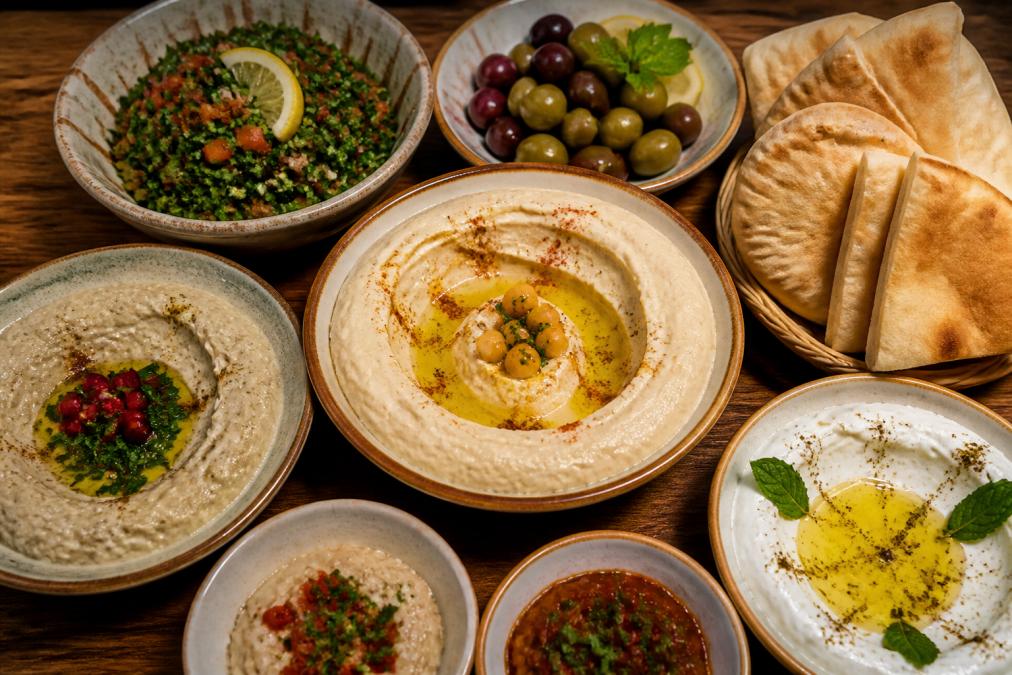
Authentic Lebanese cuisine is widely imitated but often misunderstood. At Blue Eye Bistro, we've seen how "Mediterranean" menus reduce this deeply layered culinary heritage to hummus and pita. The real thing is far more nuanced, historically rooted, and nutritionally deliberate. Below, we'll walk through what defines authentic Lebanese cuisine: the ingredients, techniques, philosophy, and cultural signals that separate the genuine article from generic imitation.
The Cultural Roots of Authentic Lebanese Cuisine
Authentic Lebanese cuisine is the product of more than 7,000 years of layered civilizations. Phoenician traders introduced preserved and fermented foods. Persian, Greek, Ottoman, and Arab influences folded into a tradition that is simultaneously ancient and remarkably practical.
The philosophy centers on abundance through variety: many small preparations, each precise, served together. This is why mezze is so central, it's not a starter course, but a worldview.
The cuisine reflects Lebanon's geography directly. The country sits at the crossroads of the Mediterranean, the Levant, and mountain ranges that separate coastal from inland climates. This geography produces extraordinary agricultural diversity, creating a cuisine that is deeply seasonal and intensely regional.
According to UNESCO's intangible cultural heritage documentation on Mediterranean food traditions, the communal and seasonal nature of Levantine food culture has been formally recognized as part of humanity's shared cultural heritage. Lebanese cuisine is not a collection of recipes, it's a living cultural practice with rules, rituals, and meaning.
Core Ingredients That Shape Every Dish
Authenticity starts in the pantry. Authentic Lebanese cuisine relies on specific staple ingredients that appear across dishes in varying combinations and are not interchangeable with generic "Mediterranean" substitutes.
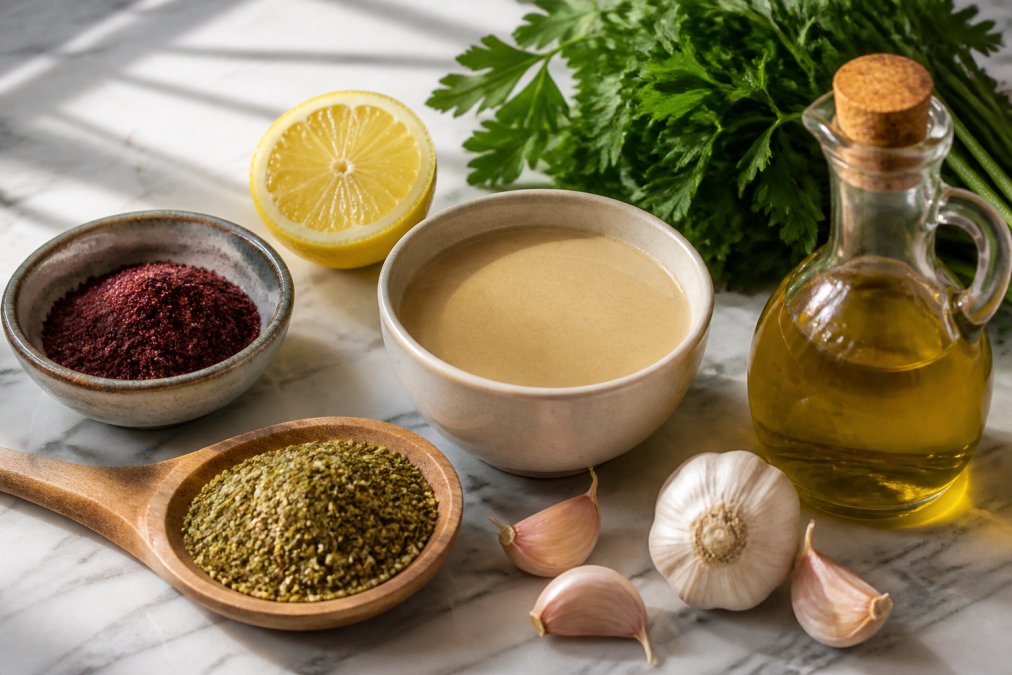
The Pantry Staples: Tahini, Sumac, Za'atar, and Pomegranate Molasses
Tahini is ground sesame paste functioning as both sauce base and flavor anchor. The difference between bland and exceptional hummus, baba ghanoush, or halawa almost always traces back to the tahini's freshness and fat content.
Sumac is a dried, ground berry with sharp, fruity acidity. It appears on fattoush, grilled meats, and raw onion salads. Cuisines that substitute generic sour flavors for sumac are already off the map.
Za'atar is a spice blend built around dried thyme, sumac, sesame seeds, and salt. It's mixed with extra virgin olive oil and eaten with flatbread as a morning staple, and appears in marinades, dips, and baked goods throughout the day.
Pomegranate molasses is reduced pomegranate juice: thick, tart, and intensely fruity. It's the backbone of muhammara and appears in dressings, marinades, and braised dishes where a sweet-sour counterpoint is needed.
Fresh Herbs, Garlic, and Lemon Juice as Flavor Foundations
Fresh parsley, mint, and cilantro are not garnishes, they are structural ingredients. Tabbouleh is primarily a parsley salad with a small amount of bulgur, not the other way around. Mint appears in raw salads, cooked dishes, and yogurt-based sauces. The herbs must be fresh; dried substitutes don't work.
Garlic is used raw, roasted, and emulsified. Toum, the fluffy, sharp garlic sauce served alongside grilled meats and vegetables, is made from raw garlic, lemon juice, salt, and oil. The emulsification requires patience and technique. It is not aioli or garlic mayo, it is its own thing.
Lemon juice functions as both acid and flavor. Freshly squeezed lemon juice appears in nearly every preparation: dressings, marinades, dips, and grain salads. Bottled lemon juice produces a noticeably flat result.
Essential Lebanese Mezze Dishes and the Dining Tradition
Mezze dishes are the clearest expression of what this cuisine values: balance, variety, and communal generosity. Mezze is a collection of small plates served simultaneously, designed to be shared across the table.
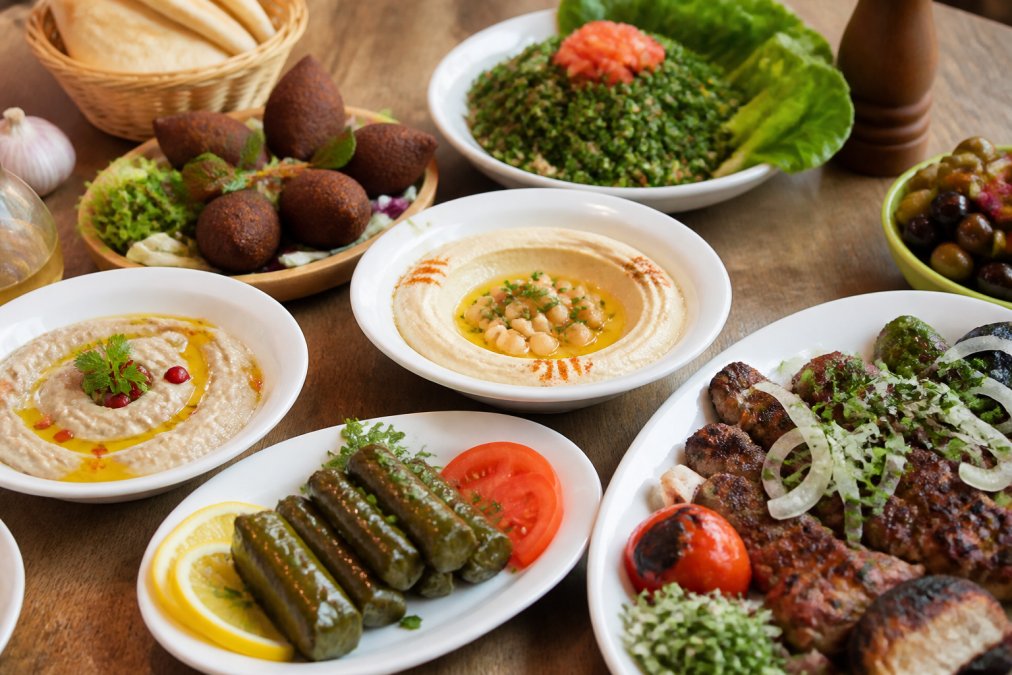
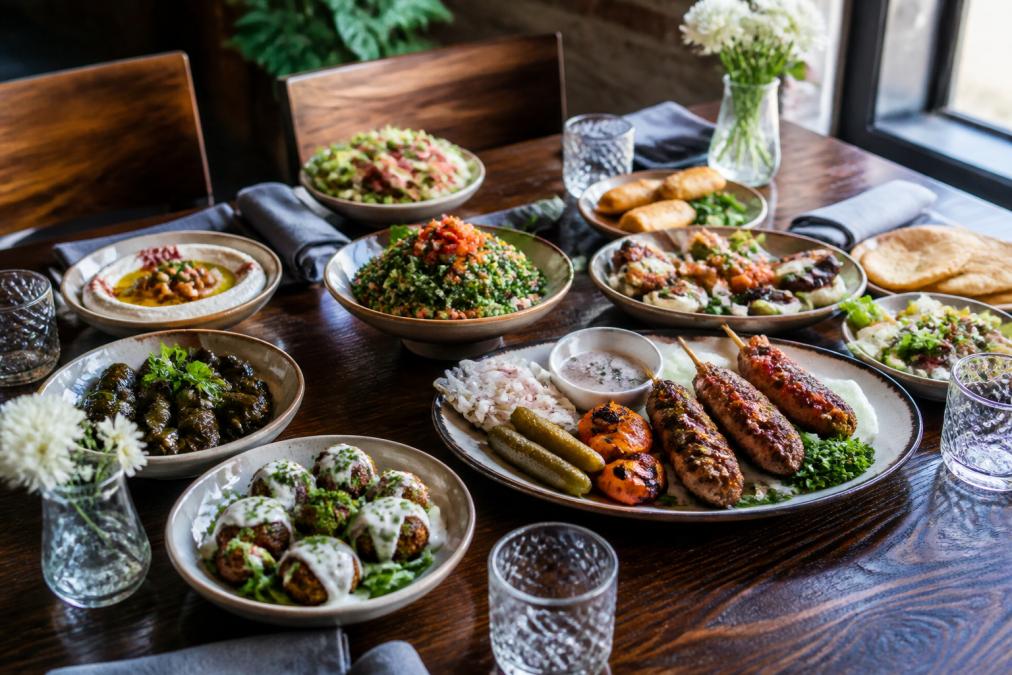
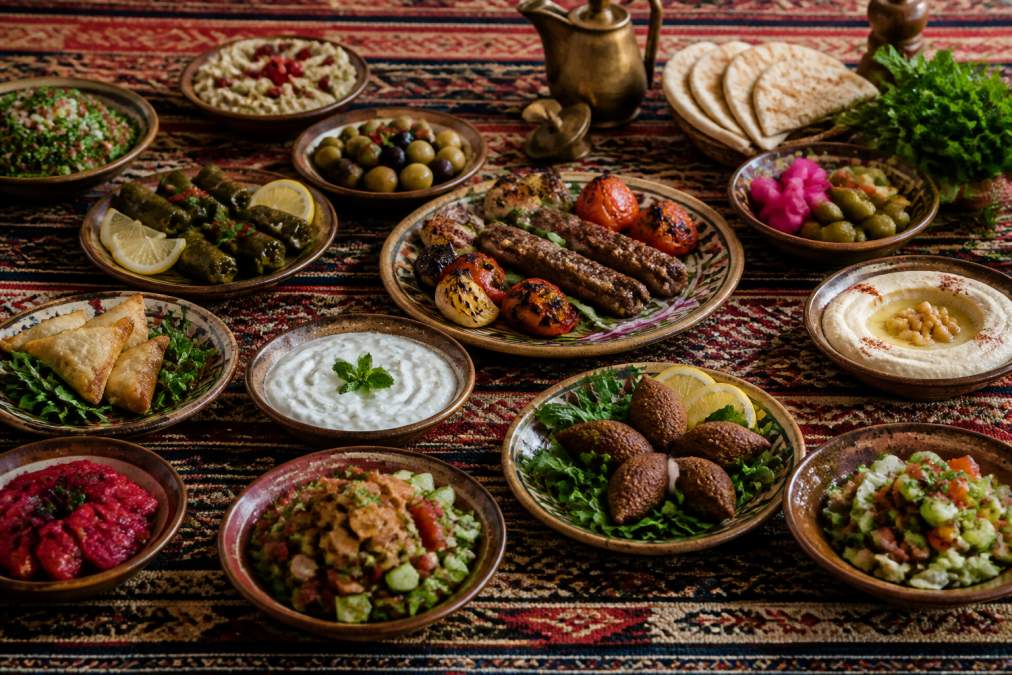
A traditional mezze spread might include hummus, tabbouleh, fattoush, baba ghanoush, kibbeh, stuffed grape leaves, labneh, olives, pickled vegetables, and toum alongside grilled flatbreads. The range of textures and flavors is intentional: creamy beside crunchy, acidic beside rich, cold beside warm.
What separates authentic mezze from a generic appetizer platter is the internal logic of the spread. Each dish is complete in itself, but the selection complements and contrasts across the table.
| Mezze Dish | Primary Ingredients | Flavor Profile | Served |
|---|---|---|---|
| Hummus | Chickpeas, tahini, lemon, garlic | Creamy, nutty, bright | Room temperature |
| Tabbouleh | Parsley, bulgur, tomato, lemon | Fresh, acidic, herbaceous | Cold |
| Baba Ghanoush | Roasted eggplant, tahini, garlic | Smoky, rich, tangy | Room temperature |
| Fattoush | Mixed greens, sumac, toasted pita | Crunchy, tart, fresh | Cold |
| Kibbeh | Lamb, bulgur, pine nuts, spices | Savory, aromatic, dense | Hot or room temp |
| Labneh | Strained yogurt, olive oil, za'atar | Tangy, creamy, herbal | Cold |
| Muhammara | Roasted peppers, walnuts, pomegranate molasses | Sweet, smoky, complex | Room temperature |
Mezze Etiquette and the Hospitality Philosophy
Hospitality in Lebanese culture is a moral obligation, not a service transaction. A guest is never allowed to feel hungry, and the table is always set with more than enough. Food keeps arriving, dishes are refilled before they're empty, and bread is always present.
Eating is slow and conversational. The mezze format supports long, leisurely meals where food is secondary to connection. Rushing through a Lebanese meal is considered a social failure.
For unfamiliar diners, resist the instinct to order sequentially. Let the spread arrive together, share everything, and eat at the pace the food invites.
Traditional Lebanese Cooking Techniques That Preserve Authenticity
Traditional Lebanese cooking techniques maximize flavor from simple, high-quality ingredients rather than masking mediocre ones with complexity.
Open-flame grilling is central to meat and vegetable preparation. Kafta, shish taouk, and lamb chops are cooked directly over charcoal or wood flame. The char is a flavor component, not incidental. Gas grilling produces a different result.
Slow braising appears in dishes like fasolia, a white bean and lamb stew, and freekeh with chicken. The technique extracts collagen and integrates spice profiles over hours, producing depth that quick cooking cannot replicate.
Kibbeh preparation is technically demanding. The base is fine bulgur and raw lamb pounded to a smooth paste, then shaped, filled, and either baked, fried, or served raw. Getting the texture right requires practice and correct bulgur grade.
Charring eggplant directly over flame is the correct technique for baba ghanoush. The skin must blacken completely to produce the smoky interior that defines the dish. Oven-roasted eggplant produces a milder flavor that misses the point.
According to the Culinary Institute of America's resources on Mediterranean cooking traditions, the emphasis on fresh, minimally processed ingredients and open-fire techniques in Levantine cooking aligns with broader principles of Mediterranean gastronomy practiced for millennia.
Why Lebanese Cuisine Ranks Among the World's Healthiest
Lebanese cuisine's alignment with the Mediterranean diet is structural. The diet's core principles, heavy reliance on legumes, whole grains, fresh vegetables, extra virgin olive oil, and lean proteins, describe Lebanese cooking precisely.
Chickpeas appear in hummus, stews, and grain salads. Lentils form the base of mujaddara, one of the oldest continuously eaten dishes in the region. Bulgur, a whole grain made from cracked wheat, appears in tabbouleh and kibbeh. These are foundational staples, not health-food additions.
Extra virgin olive oil is the primary cooking fat. Cold-pressed, high-polyphenol extra virgin olive oil carries flavor compounds that refined oils lack entirely.
As documented in Harvard T.H. Chan School of Public Health's overview of the Mediterranean diet, diets built around Eastern Mediterranean food patterns are consistently associated with positive health outcomes. Lebanese cuisine fits this pattern because its traditional ingredients are nutrient-dense, plant-forward, and minimally processed.
Many celebrated dishes, hummus, tabbouleh, fattoush, mujaddara, labneh, are either fully plant-based or easily adapted to be so. This reflects centuries of cooking in a region where meat was expensive and vegetables abundant.
Meat, Poultry, and Seafood in Lebanese Cooking
Lamb is the prestige protein. It appears in kibbeh, grilled as chops or skewers, slow-braised in stews, and ground into kafta alongside parsley, onion, and spices. The spice profile typically includes allspice, cinnamon, and black pepper, giving Lebanese meat dishes their distinctively warm, aromatic character.
Poultry, particularly chicken, is the everyday protein. Shish taouk, marinated chicken skewers grilled over open flame, is one of the most widely eaten dishes. The marinade typically includes yogurt, garlic, lemon juice, and warm spices. The yogurt tenderizes the meat while garlic and lemon drive the flavor.
Seafood plays a significant role in coastal Lebanese cooking. Grilled whole fish, seafood stews, and fried calamari with garlic sauce are common preparations emphasizing freshness: simply prepared fish with olive oil, lemon, and fresh herbs.
What unites meat, poultry, and seafood preparations is the marinade philosophy. Lebanese marinades are not subtle background flavors, they are the primary flavor statement, built from garlic, lemon juice, olive oil, and spices applied generously and given time to penetrate.
How to Recognize Authentic Lebanese Cuisine vs. Generic Imitations
Most people who've been to several "Mediterranean" restaurants sense something is off. Here's how to read the signals.
The tabbouleh test: Authentic tabbouleh is overwhelmingly parsley with a small amount of fine bulgur, fresh tomato, mint, lemon juice, and olive oil. If bulgur dominates, the dish has been Americanized.
The bread quality: Authentic Lebanese flatbread, khubz, is soft, slightly chewy, and blistered from a hot oven. Commercial pita is a different product. Bread should arrive warm.
The garlic sauce: Toum should be white, fluffy, intensely garlicky, and stable at room temperature. If it's thin, yellowish, or tastes primarily of mayonnaise, it's not toum.
The olive oil: Authentic Lebanese cooking finishes dishes with a visible drizzle of good extra virgin olive oil. If hummus arrives without an olive oil pool on top, something is missing.
The spice logic: Lebanese food is aromatic, not hot. If a dish is aggressively spicy in the chili-heat sense, it has been adapted for a different palate. Warmth comes from allspice, cinnamon, cumin, and coriander, not heat.
According to the James Beard Foundation's resources on culinary authenticity and food culture, the distinction between authentic preparation and cultural adaptation is increasingly important as Middle Eastern cuisines gain broader visibility.
Blue Eye Bistro approaches this directly. The menu is built around family recipes and chef-developed preparations that honor the original ingredient logic and technique, not a simplified version for the lowest common denominator.
A practical checklist for evaluating authenticity:
- Tabbouleh is herb-forward, not grain-forward
- Hummus is finished with olive oil and paprika or sumac
- Garlic sauce is fluffy and intensely garlicky, not mayo-based
- Bread arrives warm and freshly made or baked
- Spice profiles are aromatic and warm, not hot
- Pomegranate molasses, sumac, and za'atar appear on the menu
- Mezze is designed for sharing, not individual portions
- Seasonal produce is featured, not frozen or canned substitutes
Finding authentic Lebanese cuisine is challenging because imitations are everywhere and the real thing requires a kitchen that cares about the difference. Blue Eye Bistro was built around that care: fresh ingredients, traditional recipes, premium meats and seafood, and a hospitality philosophy that treats every guest the way a Lebanese table treats its guests. Order online and taste the difference for yourself.
Frequently Asked Questions
What are the core ingredients that define authentic Lebanese cuisine?
Authentic Lebanese cuisine is built on extra virgin olive oil, fresh herbs like parsley and mint, garlic, lemon juice, chickpeas, bulgur, and legumes. Spice staples include sumac, za'atar, and pomegranate molasses, while tahini appears in dozens of traditional recipes. These ingredients work together to create the bright, layered flavor profile the cuisine is known for. Freshness is non-negotiable, dried or processed substitutes noticeably change the taste of dishes that have been prepared the same way for generations.
What is the significance of the mezze tradition in Lebanese dining?
Mezze is far more than an appetizer course. It is the social heart of a Lebanese meal, a collection of small, shared plates designed to encourage conversation, generosity, and connection. A proper mezze spread can include hummus, tabbouleh, fattoush, kibbeh, and toum, among others. Sharing food from common plates reflects a deep hospitality philosophy embedded in Lebanese food culture. Meals are meant to be slow, communal, and generous, which is why the mezze tradition distinguishes authentic Lebanese dining from quick or casual Middle Eastern food experiences.
How does Lebanese cuisine differ from broader Middle Eastern culinary styles?
Lebanese cuisine sits within the wider Middle Eastern culinary family but has a distinct identity shaped by its Mediterranean coastline, mountain agriculture, and centuries of trade influence. It uses lighter preparations than many regional neighbors, relying on fresh produce, citrus, and olive oil rather than heavy sauces or cream. The flavor profile leans bright and herbaceous rather than intensely spiced. Dishes like tabbouleh, kibbeh nayyeh, and toum reflect techniques and ingredient combinations specific to Lebanese culinary heritage that do not appear in the same form elsewhere in the region.
Why is Lebanese cuisine considered one of the healthiest in the world?
Lebanese cuisine aligns closely with the Mediterranean diet, which research consistently links to reduced risk of heart disease, improved metabolic health, and longevity. The diet is naturally plant-based in large part, built on legumes, whole grains like bulgur, fresh vegetables, and extra virgin olive oil. Meat portions are moderate, and preparations favor grilling or slow cooking over frying. Fresh herbs add nutrients without calories. The combination of nutrient-dense ingredients, minimal processing, and balanced macronutrients places Lebanese food among the most health-supportive culinary traditions globally.
This article was written using GrandRanker